Thermodynamics and Texture: The Engineering of Micro-foam in Compact Systems

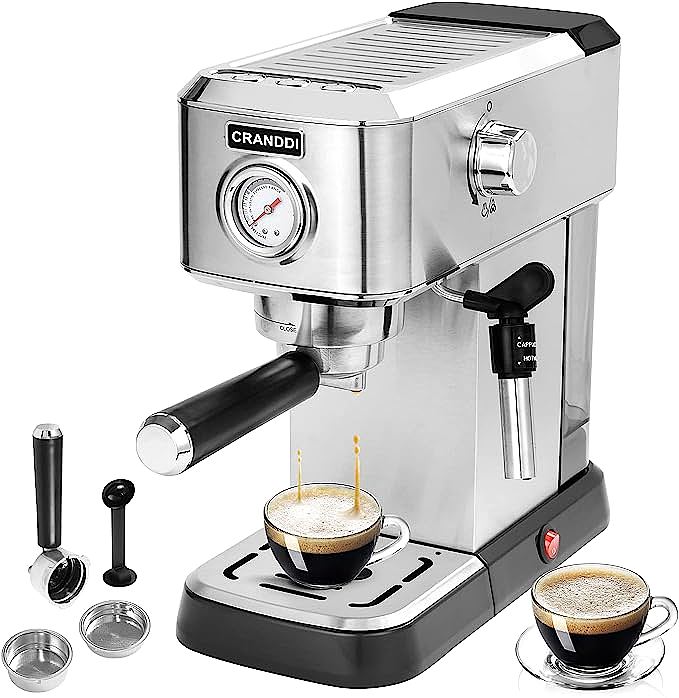
QJA 08 Espresso Machine
The allure of the café experience is rarely just about the black coffee; for many, it is defined by the transformative marriage of espresso and milk. The cappuccino, the latte, the flat white—these beverages rely on a singular, technical miracle: micro-foam. This velvety, sweet, and structurally stable suspension of air bubbles in milk is difficult to master and even harder to engineer into a compact appliance. When we examine machines like the QJA 08 Espresso Machine, with its integrated "Milk Foaming System" and steam wand, we are looking at a device trying to replicate the thermodynamic power of a commercial boiler within a domestic footprint.
Understanding how a home machine creates micro-foam requires a dive into the physics of phase changes, the chemistry of milk proteins, and the fluid dynamics of vortex creation. It is a challenge of managing heat and pressure simultaneously. While the espresso extraction focuses on water pressure (bar), milk texturing focuses on steam pressure and dryness. This article explores the unseen science behind the steam wand, analyzing how modern compact machines empower the home barista to create latte art-worthy texture without the industrial infrastructure of a coffee shop.
The Phase Change Challenge: Generating Steam on Demand
In a commercial espresso machine, steam is drawn from the top of a massive boiler where water sits above 100°C under pressure. It is a reservoir of potential energy, ready to be unleashed instantly. Compact home machines, however, rarely have space for such a boiler. Instead, they utilize the same Thermoblock used for brewing coffee, but in a different operational mode.
When a user switches the QJA 08 to "Steam" mode, the machine must bridge a significant thermal gap. It must take water from the reservoir and flash-heat it from room temperature to over 130°C to generate steam. This requires the 1400W heating element to operate at maximum capacity, pulsing water through the superheated maze in small, controlled bursts. The physics here is delicate: inject too much water, and the heater cools down, resulting in wet, watery steam that dilutes the milk. Inject too little, and the steam pressure creates a sputtering, dry cough that lacks the force to spin the milk.
This is why the "stable steam control" mentioned in the QJA specifications is a critical engineering feature. It implies a sophisticated feedback loop between the pump and the heater. The pump must slow down significantly compared to brewing mode, feeding just enough water to be instantly vaporized. This "Flash Vaporization" technique is energy-efficient and fast, but it produces a different quality of steam compared to a boiler—often wetter and with pulsing pressure. Mastering this characteristic is the first step for any home barista using a compact machine.
The Chemistry of Texture: Protein Denaturation and Fat Stabilization
Why do we steam milk? It’s not just to make it hot. We steam it to change its physical structure and chemical taste profile. Milk is a complex colloid containing water, lactose (sugar), proteins (casein and whey), and fats.
When steam is injected into milk, two things happen simultaneously: Aeration (Stretching) and Heating.
1. Aeration: The steam tip injects air into the cold milk. The whey proteins in the milk act as surfactants—they unravel and form a film around these air bubbles, trapping them. This is what creates foam.
2. Heating: As the temperature rises, the lactose becomes more soluble and perceived as sweeter (sweetest between 60°C-65°C).
The danger zone lies in the heating. If the milk exceeds 70°C, the proteins completely denature and the sulfur compounds are released, leading to a "scalding" taste and the collapse of the foam structure. A high-powered commercial machine can heat a pitcher of milk in 5 seconds, giving the barista very little time to react. A compact machine like the QJA 08, with its thermoblock-driven steam, is naturally slower. This "low-velocity" steaming is actually a benefit for the learner. It expands the time window for texturing, allowing the user to carefully introduce air (listen for the "paper tearing" sound) and then submerge the wand to create the vortex.
The Vortex Dynamics: Single-Hole vs. Multi-Hole Steam Wands
The physical shape of the steam wand tip dictates the fluid dynamics within the milk pitcher. Commercial machines often use 3 or 4-hole tips to create a chaotic, high-energy turbulence that rapidly mixes the milk. Home machines often employ a Single-Hole Tip, and for good reason.
A single jet of steam is easier to control. It allows the user to direct the force to the side of the pitcher, initiating a rotational flow or "vortex." This vortex is essential for Texturing (or polishing) the milk. Once the air has been introduced (stretching), the bubbles are often too large and unequal. The spinning vortex acts like a centrifuge, pulling the large bubbles down and pulverizing them against the walls of the pitcher and the liquid shear forces, dividing them into microscopic bubbles—hence "micro-foam."
The QJA 08’s steam wand is designed to facilitate this rotation even with lower total steam volume. By concentrating the pressure through a focused nozzle, it maintains the kinetic energy needed to keep the milk spinning. This is the secret to achieving the "wet paint" texture required for latte art. Without a vortex, you simply have hot milk with dry bubbles floating on top—the nemesis of a good cappuccino.
Maintenance as a Function of Performance: The Self-Cleaning Imperative
Milk is a biological substance, and when it dries, it creates a glue-like residue that is a breeding ground for bacteria and a block for steam mechanics. In a system relying on a narrow thermoblock and a precision nozzle, a blockage is catastrophic. The "Auto Clean Function" highlighted in the QJA 08 is not just a hygiene feature; it is a mechanical necessity.
After steaming, as the thermoblock cools down, a vacuum can form, potentially sucking milk residue back up into the wand (a phenomenon called "back-siphoning"). This can clog the delicate steam tip or, worse, contaminate the internal tubing. The self-cleaning logic likely involves a "purge" cycle—forcing a burst of hot water or steam through the wand immediately after use to expel any milk solids before they can bond to the metal surfaces.
Furthermore, scale management is critical for steam performance. Steam generation leaves behind concentrated minerals in the thermoblock (since only pure water vapor exits). Regular descaling ensures that the heating element retains its efficiency. A scaled element transfers heat poorly, leading to cooler steam, wetter foam, and eventually, a total failure to generate pressure. The user’s adherence to these maintenance rituals directly correlates to the machine’s ability to produce quality micro-foam over its lifespan.
Conclusion: The Art of the Possible
The democratization of espresso is incomplete without the democratization of milk texturing. Machines like the QJA 08 bridge this gap by employing clever thermodynamic engineering. By balancing the power constraints of a 1400W thermoblock with the fluid dynamics of a focused steam jet, they provide a platform where the physics of micro-foam can be explored in a home kitchen.
While it requires a different technique than a commercial powerhouse—more patience, more attention to the purge cycle, and a keen understanding of the vortex—the result is chemically identical: sweet, creamy, textured milk that elevates coffee from a caffeine delivery system to a culinary experience. The technology has provided the tool; the rest is up to the "Quality, Joy, and Art" of the user's hand.
QJA 08 Espresso Machine
Related Essays
The Chemistry of Comfort: Microfoam, Maillard Reactions, and the Sensory Ritual of the Home Cafe